
From every island
Mental health care in Hawaii, without flying to Oahu.
For most of the state, getting more than a weekly appointment has always come with a boarding pass. Specialty care concentrates in Honolulu, and if you live on Maui, Kauai, Hawaii Island, Molokai, or Lanai, stepping up your care has meant airfare, a day off work, and a hotel room if the weather turns. It does not have to work that way anymore.
The interisland tax on getting better.
Neighbor island families all know the arithmetic. A specialty appointment in Honolulu is never one appointment — it is a flight each way, rides to and from two airports, a workday gone, and hours built around a visit that lasts forty-five minutes. Some insurance plans offer interisland travel benefits; anyone who has used one can tell you what that amount covers against real fares.
For a weekly commitment the math is hard. For an intensive program — four days a week — it is impossible, and everyone quietly knows it. So the treatment that exists on Oahu may as well not exist for the islands around it, and some families have made the hardest trade there is: leaving Hawaii altogether, for no reason except the address of their care.

How it holds up
What video changes, and what it does not.
The clinical content of an intensive outpatient program is structured conversation — group work, individual sessions, family sessions, psychiatry. All of it moves over video without losing what makes it work, which is why care teams across the islands already use video every day.
What does not change: the clinicians are licensed in Hawaii, the program runs the same twelve clinical hours, and the standards are the same ones an in-person program answers to. What changes is what the distance costs you — which becomes nothing.
One more distinction that matters. This is a clinical program that reaches you by video — one team, one chart, one treatment plan that runs twelve weeks. It is not a marketplace app that matches you to whoever is available this week. If you have tried one of those and bounced off, that was not video failing you.
Where we serve
All of the islands.
Care is delivered by video, so the island you live on stops being a clinical variable.
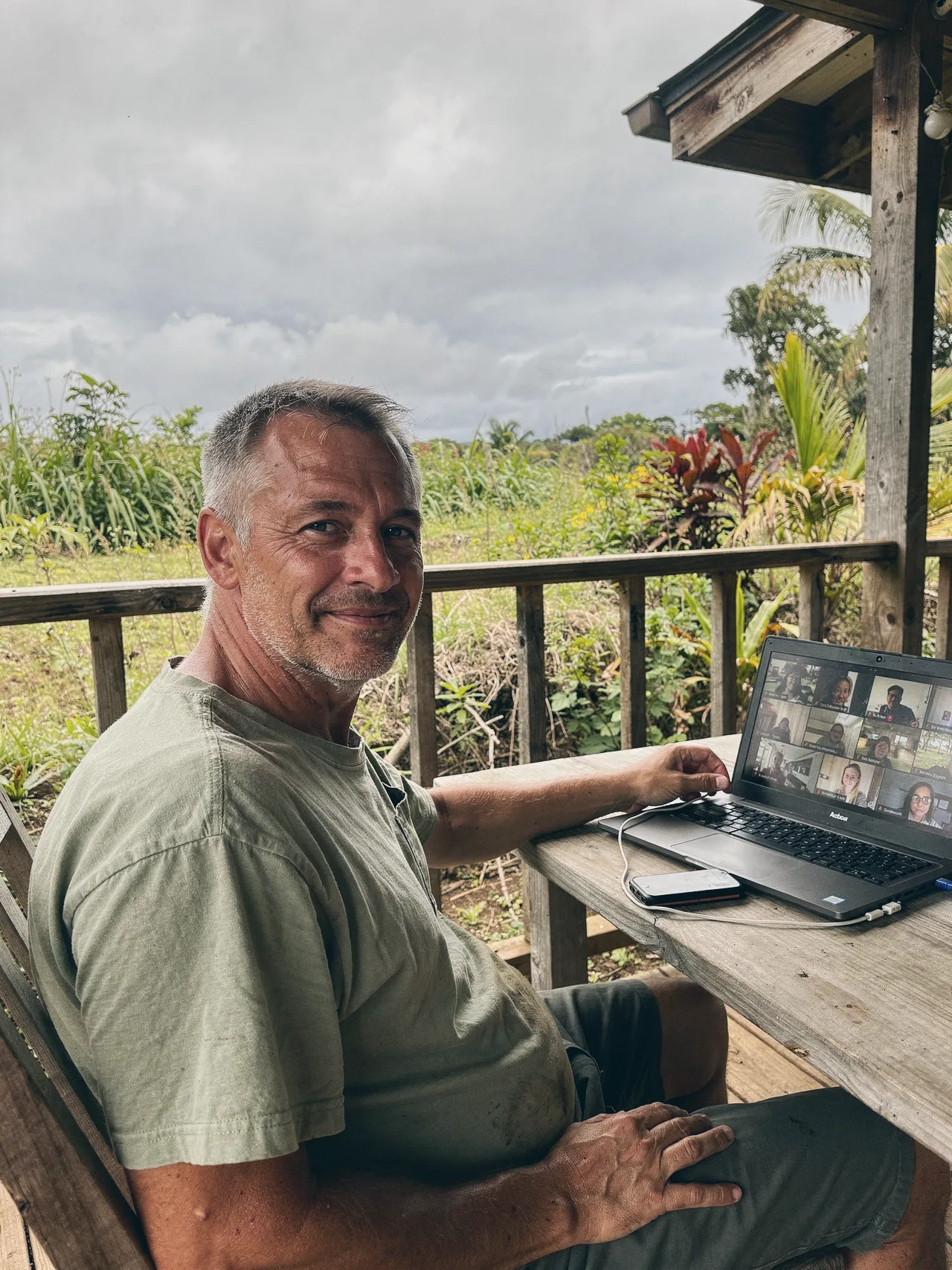
Privacy, on islands where everyone knows everyone.
On an island where your cousin works at the clinic and your neighbor is behind you at the pharmacy, wanting privacy is not paranoia — it is a reasonable design requirement. Care by video means no parking lot, no waiting room, no chance encounters. A door you close, a group that is not from your town, and clinical records that stay clinical records.
Questions
Straight answers.
Can I really do an intensive program from Molokai or Lanai?
Yes. The program needs a private space, a device with a camera, and a connection that can hold video. If connectivity is genuinely unreliable where you live, tell us during intake — we have worked around it before, and we would rather engineer around your connection than have you disappear from group.
Are the clinicians actually in Hawaii?
They are licensed in Hawaii, which is the part that is enforceable and the part that matters clinically. It also means the people treating you understand what living here actually involves — which islands lose power in a storm, what a red-eye to a specialist costs a family, and why some things are not talked about at the dinner table.
Is video treatment legitimate, or is this another therapy app?
It is an outpatient clinical program delivered by video — a fixed care team, a twelve-week curriculum, psychiatry, and family work under one treatment plan. Apps that rent you a rotating therapist are a different product. The honest test for any program, ours included: ask who holds your chart, and how many people are on your team.
What if I turn out to need in-person care?
Then we say so and help you get there. The clinical assessment at the start is where level of care gets decided honestly, and if what you need is a hospital, residential treatment, or an in-person specialist, our job becomes connecting you rather than keeping you.
Does being on a neighbor island change the cost?
No. The program is the same on every island, and there is no travel to pay for — which for many neighbor island families has historically been the largest cost of care. Coverage questions are about your plan, not your address; we verify benefits before you commit either way.
Get real help from where you live.
Reaching out is the hardest part, and it is the only part you have to do alone. Everything after this, we do with you — no boarding pass involved.