
Programs
Real clinical care, delivered where you already are.
Connected care, one clinical team. Clients who begin in IOP can step down to individual therapy as their needs change, with the same team wherever possible.
Virtual Intensive Outpatient (IOP)
Our core program, in two separate tracks — mental health, and substance use — with a co-occurring path for people who need both. Twelve weeks, four evenings a week, entirely by video.

IOP is the step between weekly therapy and residential treatment. It is built for people who need real clinical intensity but cannot stop working, studying, or parenting to get it. The mental health track works depression, anxiety, trauma, and mood disorders; the substance use track works alcohol and drug recovery. They run as separate groups, because the room is different — and if you are carrying both, the co-occurring path treats them together rather than making you choose which one to name first. Groups run Monday through Thursday evenings so the program fits around the day you already have.
- Twelve clinical hours per week across four evening groups
- Separate mental health and substance use tracks, plus a co-occurring path
- Weekly individual session with your primary clinician
- Family and ohana session available every other week
- Twelve-week curriculum with a written aftercare plan at discharge
Individual therapy
One-to-one work with a licensed Hawaii clinician, weekly or every other week, on your schedule.

For people who need consistent support without the intensity of a full IOP schedule, or who are stepping down after completing the program. Same clinicians, same evidence-based approaches, fewer hours.
- CBT, DBT skills, motivational interviewing, and trauma-informed care
- Evening and early-morning appointments designed around work, school, and family schedules
- Continuity with your IOP clinician wherever possible
Psychiatry and medication management
Evaluation, prescribing, and ongoing medication management by licensed prescribers, integrated with your therapy.
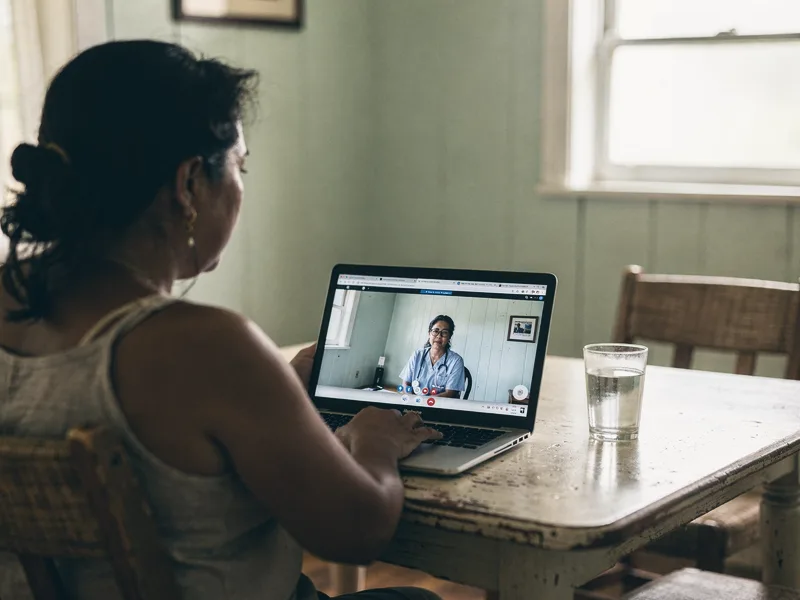
Medication decisions are made alongside the team that already knows you, not in a separate silo. Your prescriber sits in the same case conference as your therapist.
- Initial psychiatric evaluation within your first two weeks
- Ongoing management visits at the cadence your care requires
- Coordination with your primary care physician on request
Family and ohana support
Recovery holds better when the people around you understand it. Family sessions are part of the program, not an add-on.

We bring partners, parents, and chosen family into the work at a pace you control. Sessions are educational as much as therapeutic — most families have never been told what to expect or how to help.
- Family session every other week during IOP
- Education on boundaries, relapse warning signs, and how to respond
- Available by video from any island, or any time zone
Questions
Straight answers.
Is this the same as in-person IOP?
Clinically, yes. The same hours, the same evidence-based curriculum, the same licensed clinicians. What changes is that you are not driving across the island, catching a ferry, or flying to a different island to get it.
Do you treat mental health, substance use, or both?
Both, in separate tracks. The mental health track works depression, anxiety, PTSD and other trauma, and mood disorders. The substance use track works alcohol and drug recovery. If you are carrying both — sometimes called co-occurring or dual diagnosis, and more common than not — that path treats them together instead of asking you to pick one to work on first.
Is an online IOP as effective as going somewhere in person?
The clinical content is the same: same hours, same evidence-based curriculum, same licensed Hawaii clinicians. What changes is the commute. We are not going to quote you an outcome percentage — ask any program that does where the number comes from, and whether it is their own data or the field’s.
Which islands do you serve?
All of the Hawaiian islands — Oahu, Maui, Hawaii Island, Kauai, Molokai, and Lanai. Because care is delivered by video, where you live on an island matters as little as which island you live on.
When do groups meet?
Monday through Thursday evenings. The schedule is built so you can hold a job, stay in school, and be home for your family.
Do you take insurance?
We verify your benefits before you start and tell you your expected out-of-pocket cost up front. If we are not a fit for your plan, we will say so and point you somewhere that is.
What do I need to join a session?
A private space, a device with a camera, and a connection good enough for video. If connectivity is a real barrier where you live, tell us during intake — we have worked around it before.
What if I am in crisis right now?
Call or text 988 for the Suicide and Crisis Lifeline, any time, from any island. If someone is in immediate danger, call 911. HVC is an outpatient program and is not an emergency service.
Not sure which level is right???
That is what the assessment is for. A licensed clinician will tell you honestly where you belong — including if that is somewhere other than here.