
Programs
Family and ohana support.
Recovery holds better when the people around you understand it. Family sessions are part of the program rather than an add-on, and they run by video from any island or any time zone.
Who these sessions are for.
Partners, parents, adult children, and chosen family. Most families arrive having tried everything they could think of, with nobody having told them what actually helps.
- You want the people closest to you to understand what is being treated
- Your family's help has turned into monitoring, and everyone is exhausted
- You are the family member, and you are the one who went looking for this page
- Something needs to be said in a room with a clinician in it
What it involves
What a family session covers.
Education first
Most of the early work is information: what the condition is, what treatment is doing, what progress actually looks like, and which changes are expected rather than alarming. Guessing is what makes families frightened.
Boundaries that hold without punishing
The line between supporting someone and organizing your life around their symptoms is hard to find alone. Sessions work the specifics of your household, not general principles.
Warning signs and what to do
Families are usually first to see a slide starting. Knowing what to watch for, and what to say when you see it, converts helpless worry into something usable.
At a pace the client controls.
Family work is not a disclosure event. The client decides who to involve and, within the limits of confidentiality law, what they want discussed — because a session that trades someone’s trust for family peace has cost more than it bought. Sessions run every other week during the intensive program, and some clients start with education for their family and no shared clinical detail at all.
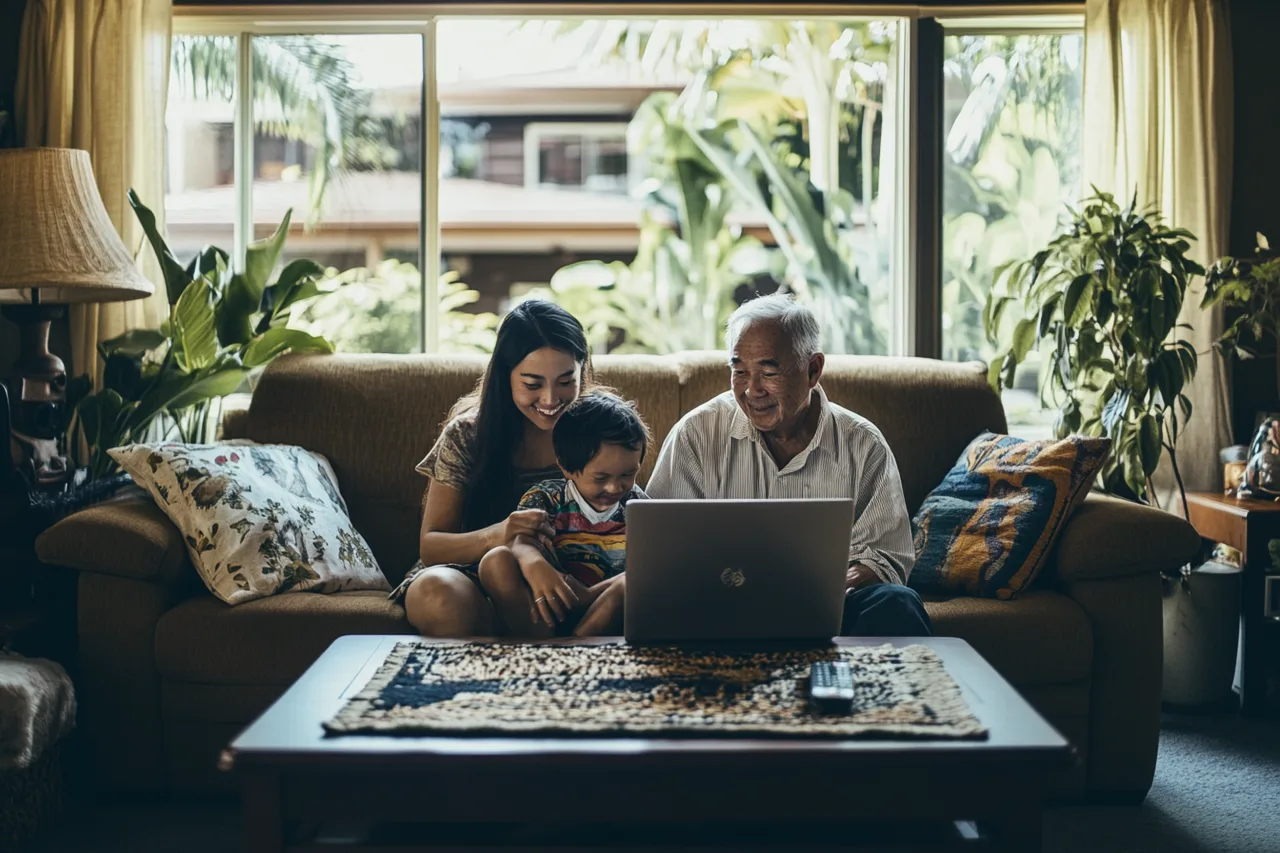
The video format quietly solves a real problem here. Families in Hawaii are spread across islands and across the mainland, and getting three people into one physical room on a Tuesday evening rarely happens. A session that a mother on Kauai, a brother in Las Vegas, and a client on Oahu can all join is a session that actually occurs.
Questions
Straight answers.
Does my family have to participate?
No. Family sessions are offered and encouraged, not required, and some people have good reasons for keeping treatment separate from their household. That is a clinical conversation, not a compliance issue.
Can family join from another island or the mainland?
Yes, and they routinely do. Sessions are by video, so a parent on Molokai and a sibling in Nevada can be in the same session. Tell us the time zones at intake and scheduling works around them.
What if my family does not believe in therapy?
That is common enough that the education session exists partly for it. Skepticism usually softens faster in a room where someone explains what is happening and answers questions directly, and it tends to soften faster still when the frame is helping their person rather than examining them.
I am the family member. Can I call about someone else?
Yes, and a lot of the calls we take are from a spouse, a parent, or an adult child. We can explain what the program is, what it treats, and how the assessment works. What we cannot do is enroll an adult who has not decided to be treated, or discuss the care of someone who has not authorized it — but the conversation about how to approach them is one worth having.
Bring the people who are already carrying this.
Reaching out on someone else’s behalf is not overstepping. It is usually how treatment starts.